
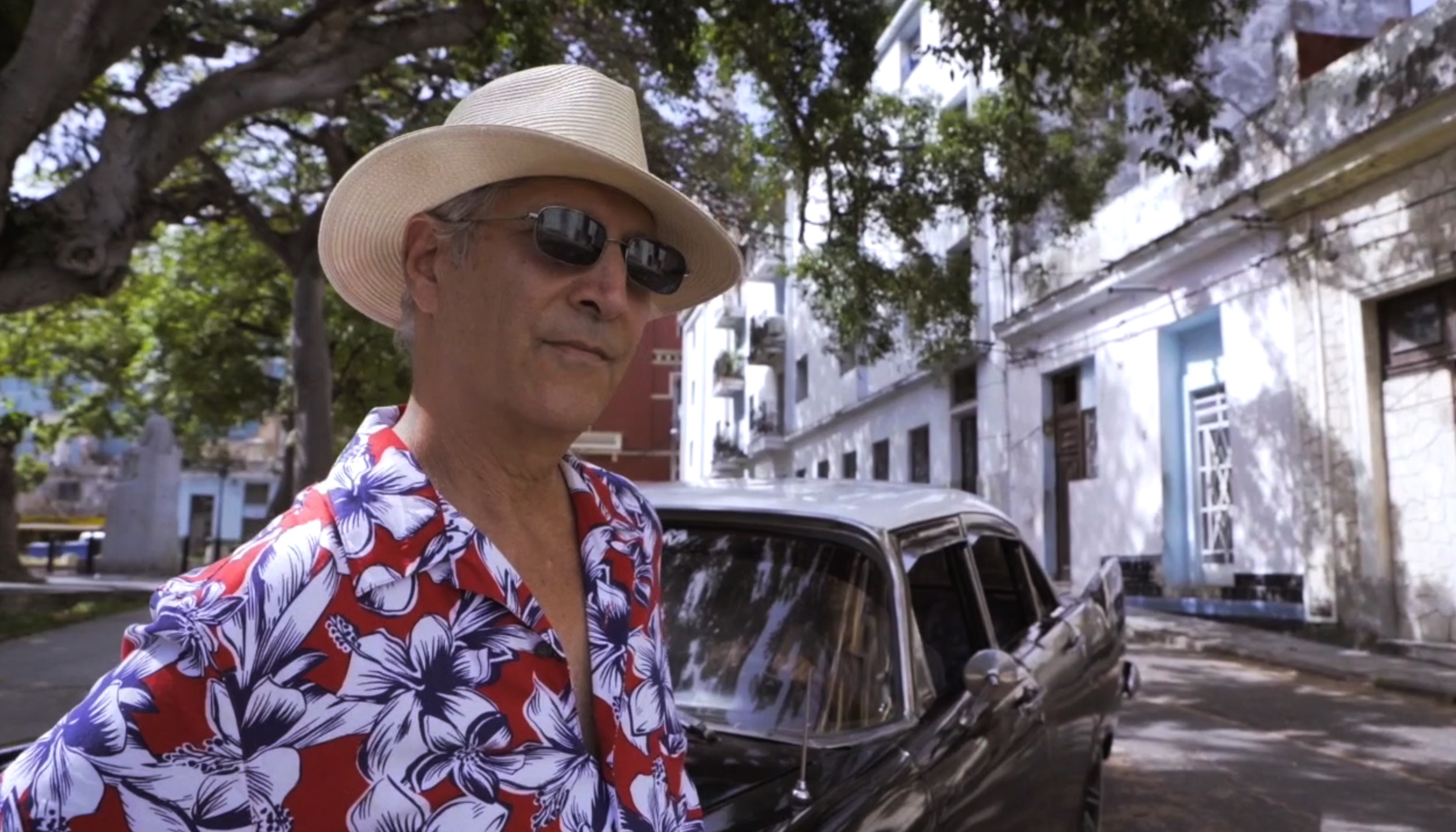
Roots / Philip Ross
I was born in New York City and grew up in Palo Alto, California—the area now known as Silicon Valley. My father was a technology salesman and political activist. While I was often at odds with him, I inherited his radicalism and embrace of alternative worldviews.
The Bay Area of the 1960s and '70s was the global epicenter for innovations in both alternative lifestyles and technology. It was a time of cultural revolution, political upheaval, and explorations of altered states of consciousness. Living through this period and being exposed to such an alternative culture had a big effect on me.
At 13, I began playing guitar, taking lessons, and learning rhythm & blues styles. Several years later, in 1969, I attended a rock concert in San Francisco where Mongo Santamaria's Afro-Cuban band was the opening act.
While I had heard Boogaloo—a blend of Latin and Black soul music—on the radio, the complexity and power of Mongo’s band were unlike anything I had experienced before. Seeing them play like a living organism—musicians attuned to each other, each playing a separate part but locked together—dropped me into another realm. This performance experience, which included myself, the audience, and the musicians, evoked a strong déjà vu of another time when communities were bonded by their connection to embodied rhythm and power. That early exposure to Afro-style music set the course of my life, while also inspiring a desire for a more primal lifestyle.
Primal Turn
In response to the cultural shifts of the 1970s, I adopted a primal lifestyle and went nomadic, cycling through the wilds of the Santa Cruz Mountains, British Columbia, and Arizona each year for more then a decade. I learned practical skills, self-sufficiency, and got involved with back to the land-sea communities of like-minded individuals.
By 1979, I settled in Sonoma County, California and re-dedicated myself to studying African and Afro-diaspora music and culture—through university research, private study, and performance of rhythm music.
The Pattern That Connects
In the early 1990s, I entered university to expand my intellectual life, majoring in Anthropology at Sonoma State University. During this period, I encountered the work of anthropologist and cybernetician Gregory Bateson—whose thinking on systems and pattern deeply resonated with my own experience of rhythm and culture.
Afro-Rhythmic Devotion
Over the years, I have embraced an Afro-centric focus as a music and culture student, educator, performer, and scholar. I have traveled extensively to Brazil and Cuba. In Cuba, I have developed projects as a media producer, travel director, and community facilitator. My work includes producing music-dance educational media and leading cultural immersion programs.
Evolution & Purpose
Now, many decades later, in response to the further fragmentation of modern society and the existential threats we face, I feel compelled to lay out my understanding of Afro-rhythmic systems and their social value—a model I call Socioswing. It’s a model that has guided much of my life while reflecting the often-hidden ways Afrocentric traditions have shaped and inspired what is most vital in the modern era.
Timeline
1963–1966
Rhythm guitar studies & rock band member
1971–1985
Craftsman, builder, survival artist – California, Arizona, British Columbia
1982–2000
African, Cuban, Brazilian music-dance studies & performance – California, Brazil
1991–1994
B.A. in Anthropology, Sonoma State University
1991–1996
World Music in Schools – Non-profit cultural arts director & educator
2001–2019
Boogalu Productions – Cuban music-dance media producer, director, & business owner
2015–2022
Hosted in Havana – Travel director & business owner
2014–2024
Family, community, & cultural arts facilitator